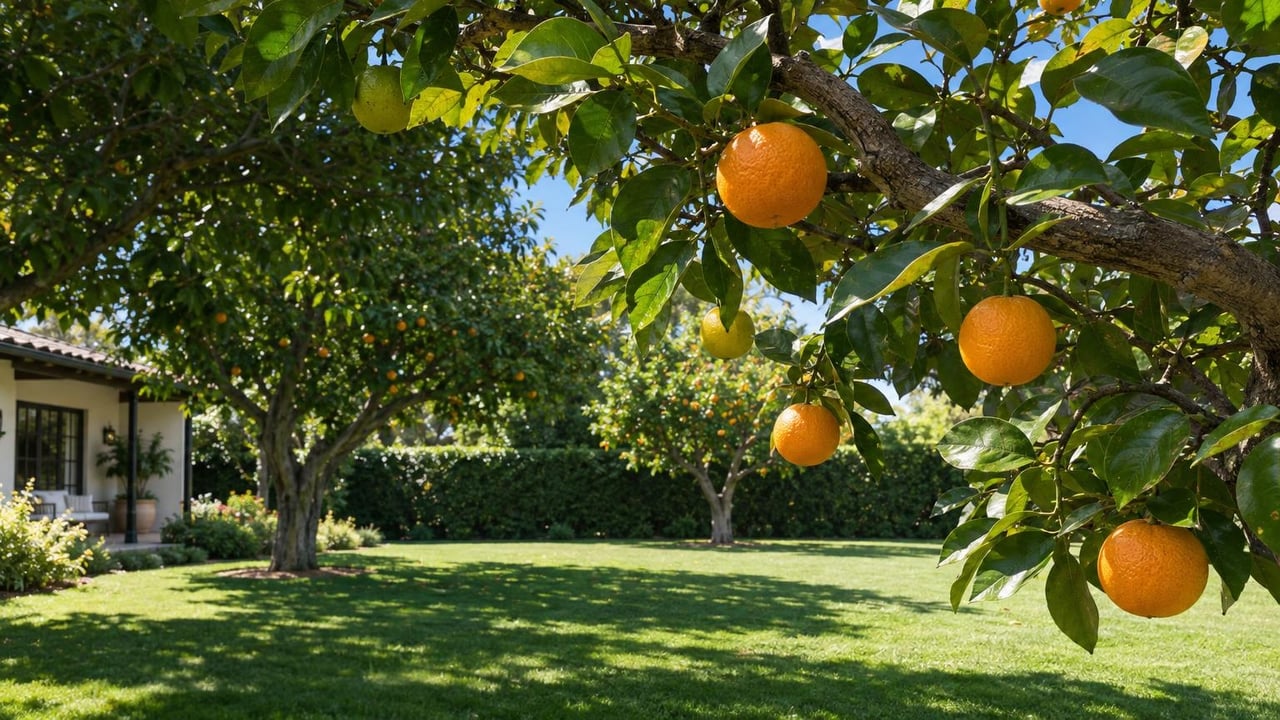
In 1899, W.J. Murphy planted the first citrus acreage in the Salt River Valley near 56th Street and Indian School Road, next to the Arizona Falls, according to a history of the area published by Arcadia News. The navel orange was the crop that paid. Arizona growers could pick it as early as November, which put their fruit in front of Thanksgiving buyers while California growers still couldn't get boxcars to the Chicago Mercantile Exchange by mid-November.
More than a century later, the trees in Arcadia's backyards still run on that early calendar. The neighborhood's main way to give away surplus fruit runs on a later one. St. Mary's Food Bank and Shepherd of the Hills UCC, at 5524 E. Lafayette Blvd., will hold Citrus Saturday drop-offs on February 6, 13 and 20, 2027, from 9 a.m. to 3 p.m. That leaves about ten weeks between Thanksgiving and the first drop-off. For most of an Arcadia crop, the tree is the best place to keep the fruit through those weeks. A few trees need attention sooner.
The donation calendar for the 2026–27 season
St. Mary's Food Bank takes citrus from every ZIP code from January 11 through April 30, 2027, at its Phoenix site, 2831 N. 31st Ave., from 8 a.m. to 4 p.m. Its free volunteer picking crews only work in four West Valley ZIP codes: 85351, 85373, 85374 and 85375. That leaves out 85018, so an Arcadia homeowner picks their own fruit and brings it in. On the same page, the food bank says it expects very few gleaning volunteers and that signing up does not guarantee a crew. It moved to the Citrus Saturday church drop-offs so it could keep collecting fruit despite the shortfall.
The Lafayette Boulevard drop-off has now become a February routine. Arcadia News listed Shepherd of the Hills Citrus Saturdays on February 1, 8 and 15 in 2025. In its January 2026 briefs, the paper listed the 2026 dates as February 7, 14 and 21. The 2027 dates fall on the same three Saturdays in early February, so this is the third year in a row. The same briefs also said Project Roots offered home pickup last season to donors who registered online.
St. Mary's asks for clean fruit with no leaves, stems, decay or other debris. Questions go to [email protected] or (602) 343-5658. Fruit that has hung on the tree until February meets that request more easily than fruit picked in December and left sitting in a box.
Why most Arcadia oranges can wait
University of Arizona Cooperative Extension says the Parent Washington navel is widespread in Central Arizona's old orchards. It is harvestable from early December through March. An older, inherited navel in a yard south of Camelback could well be this variety, and its picking window runs right through the February drop-offs.
UA's publication on oranges for southern Arizona gives holding windows for several other varieties that turn up in central Phoenix yards. Hamlin oranges ripen in November and hold on the tree until February. Atwood navels store well on the tree. Don Shaw navels hold their fruit later into spring. Valencias run on a later schedule. They are usually ready to pick from February and can hold into May or June. They get sweeter as the season goes on, though the peel may turn green again. A green-tinged Valencia in April has not gone bad.
Grapefruit is the easiest tree to leave alone. UA Cooperative Extension's December gardening guide says grapefruit can stay on the tree for several months and gets sweeter the longer it hangs. It suggests starting the harvest at the end of December. An older UA guide to low-desert citrus puts Marsh grapefruit at harvest-ready in December and best from March through May. It says Ruby Red is picked starting in December and improves if left on the tree. For a household with one big grapefruit tree, February is early in that fruit's season.
The trees to pick first
Not every tree can wait until February. UA's 2021 orange publication warns that oranges picked after they mature are more likely to granulate, the dry, grainy texture that comes from fruit left too long. Early-maturing navels and sweet oranges are the most susceptible. The Fukumoto navel, for example, is ready in late October or early November. If an early navel is the tree that colored up first this fall, its fruit belongs on the Thanksgiving table and in December's juice, not in a February donation bin.
Mandarins follow their own schedule. UA's older low-desert guide lists Algerian or Clementine and Fairchild ripening in November in the Salt River Valley. Dancy starts in December and Kinnow matures in January. In a yard with several kinds of trees, that spread lets the family eat through the mandarins first while the grapefruit and Valencias keep on the branch for February.
Lemons and limes carry the most winter risk. The December guide advises picking exposed lemons and limes before a hard freeze. It notes some injury to fruit on upper and outer branches at 28°F. Fruit at the top and outer edge of the canopy is the first to go when a cold night comes through.
What a cold night means for the tree
UA's citrus cold-protection bulletin says sweet orange, navel and grapefruit trees may survive temperatures as low as 20°F without significant damage. Lemon, lime and citron trees may be damaged below 25°F. The bulletin says most Arizona cold events are brief frosts that often last less than a few hours and rarely drop below 20°F, and protecting trees during those events often works. Longer freezes with wind are more serious, and protecting trees through them is less likely to succeed.
For small trees, the bulletin recommends covering them with blankets, quilts or burlap. It also notes that a warm, sunny spot sheltered from wind helps a tree from the day it is planted. Sprinkling the canopy works only if the water keeps running through the whole frost and until the air rises above 37°F. Since covers are practical only for small trees, a young lemon or lime is the one to keep a blanket ready for on a cold January night.
A season plan, tree by tree
Taken together, the season breaks into stages for a typical Arcadia yard:
- Late November and December: eat and juice the early navels and November mandarins first, while their quality is best.
- Before the first hard freeze: pick the exposed lemons and limes, and keep covers ready for young lemon and lime trees.
- End of December: start picking grapefruit for the house, and leave the rest hanging.
- January 11 onward: St. Mary's Phoenix site on North 31st Avenue accepts donations, 8 a.m. to 4 p.m.
- February 6, 13 and 20: take clean fruit to Shepherd of the Hills on Lafayette Boulevard, 9 a.m. to 3 p.m.
- Through April 30: Valencias and late grapefruit can still go to the Phoenix site until St. Mary's season closes.
The Citrus Saturdays fall inside the picking window for the navels and grapefruit that hold best on the tree. Parent Washington navels are good through March and grapefruit is still improving, so a household that eats the early fruit, protects the tender trees and leaves the rest on the branch will have plenty to donate in February.
The trees and the lots they grow on
The groves Murphy started spread across the land south of Camelback Mountain, where the soil suited citrus better than the grapes, dates and alfalfa farmers also tried there. The mature trees in Arcadia's yards are part of how the neighborhood looks and part of what its homes are worth, as we covered in our look at how Arcadia's lots, more than its houses, set prices. Each February, some of that fruit leaves the neighborhood by way of the church on Lafayette Boulevard.
If you're wondering what a yard of mature citrus adds to your home's value, or which Arcadia streets still have the oldest trees, Arizona Luxury Real Estate is happy to walk through it with you, street by street. Start with our Arcadia neighborhood guide, or contact us for a home valuation that accounts for what grows on the lot.